



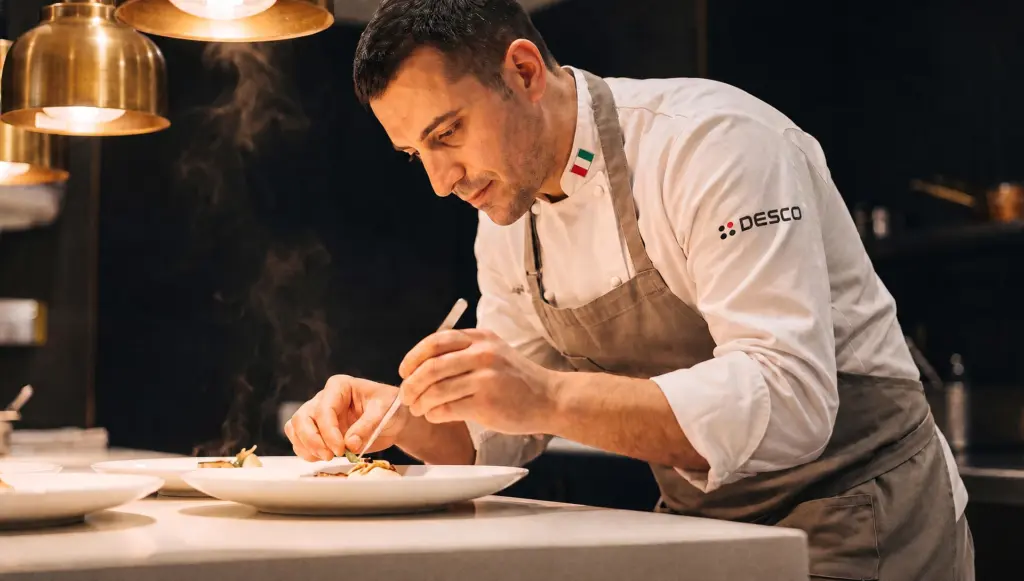
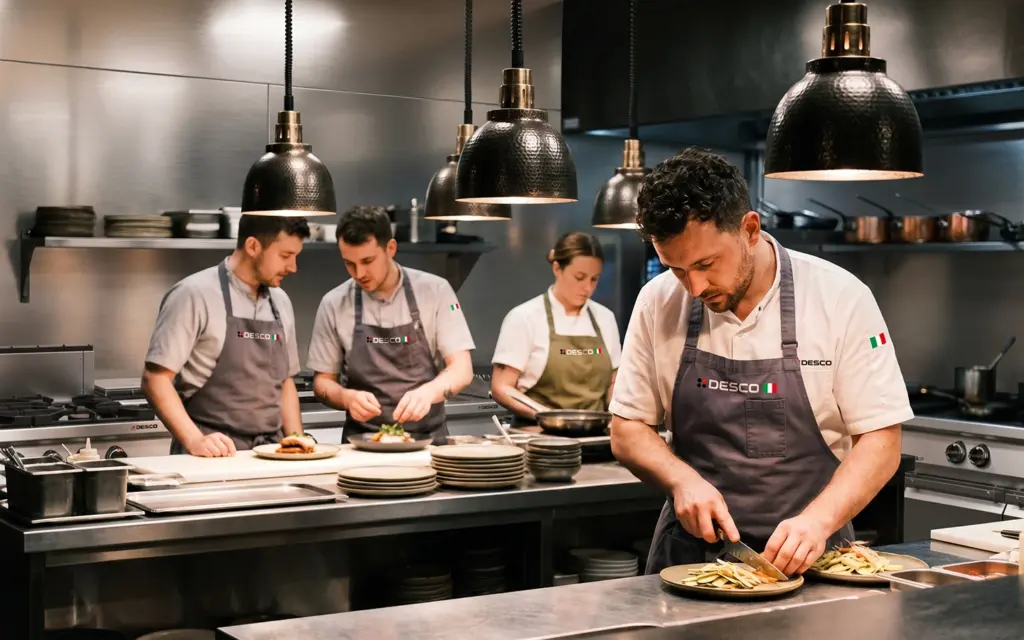
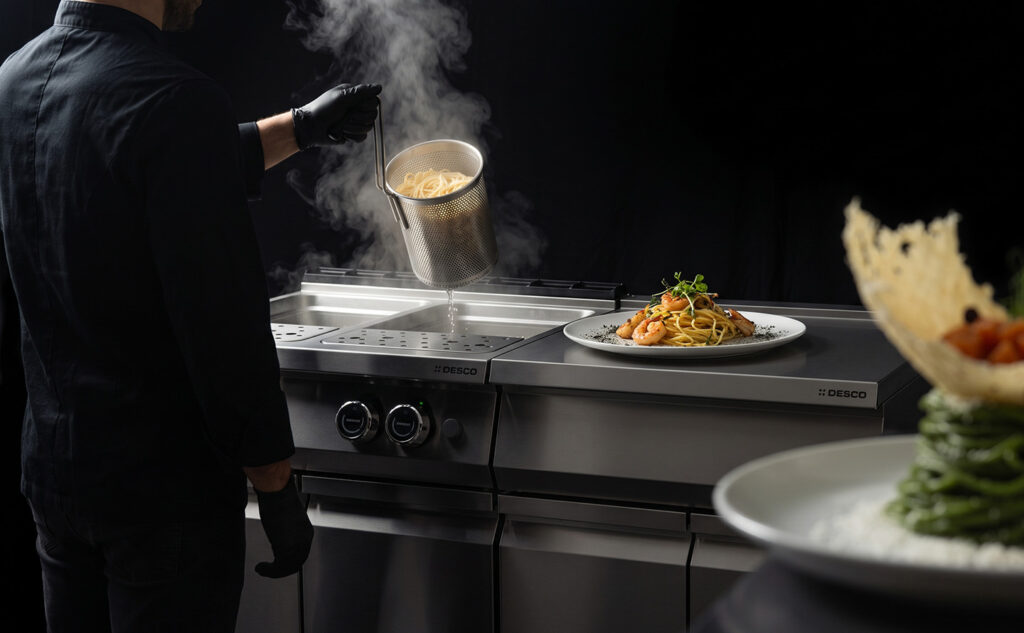

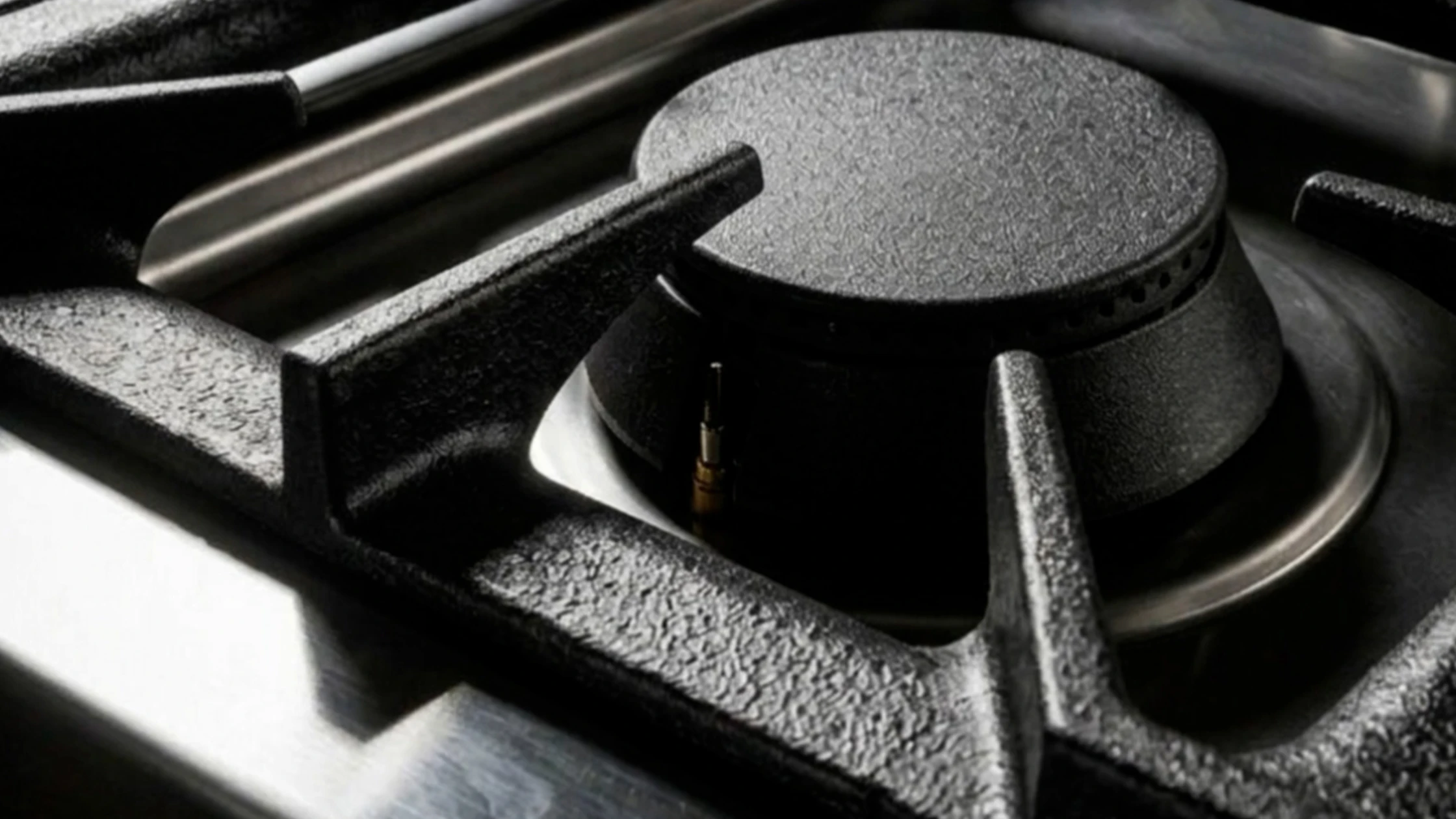
Professional kitchen design is not simply about appearance. Ergonomics, workspace organisation, materials and technology all contribute to creating functional environments designed around the real needs of chefs and kitchen teams.
Modern professional kitchen design focuses on creating flexible, functional and customisable spaces that can adapt to different working environments and operational requirements. A well-designed kitchen can influence everyday organisation, workflow efficiency and the comfort of the people working throughout the service.
Design therefore becomes a strategic part of the kitchen rather than a purely aesthetic consideration. It helps coordinate space, equipment and workflows within one coherent working environment.
Professional kitchen design starts with real workflows
Effective design begins by observing how people actually work in the kitchen. Repetitive movements, demanding service periods, cleaning requirements and the need for a safe working environment all influence individual design decisions.
Clean lines, rational configurations and ergonomic modules can help optimise available space and reduce unnecessary movement, supporting a smoother sequence of operations.
Ergonomics and workstation organisation
Working heights, storage accessibility, equipment positioning and the configuration of operational areas all contribute to professional kitchen ergonomics.
A workstation designed around the activities performed within it can make tools and equipment easier to access and help organise movement throughout the service. Design therefore becomes an integral part of operational efficiency.
Materials and surfaces designed for professional environments
Materials used in professional kitchens must be suitable for demanding everyday working conditions. Durable surfaces, appropriate finishes and materials that are easy to sanitise contribute to both functionality and long-term workspace management.
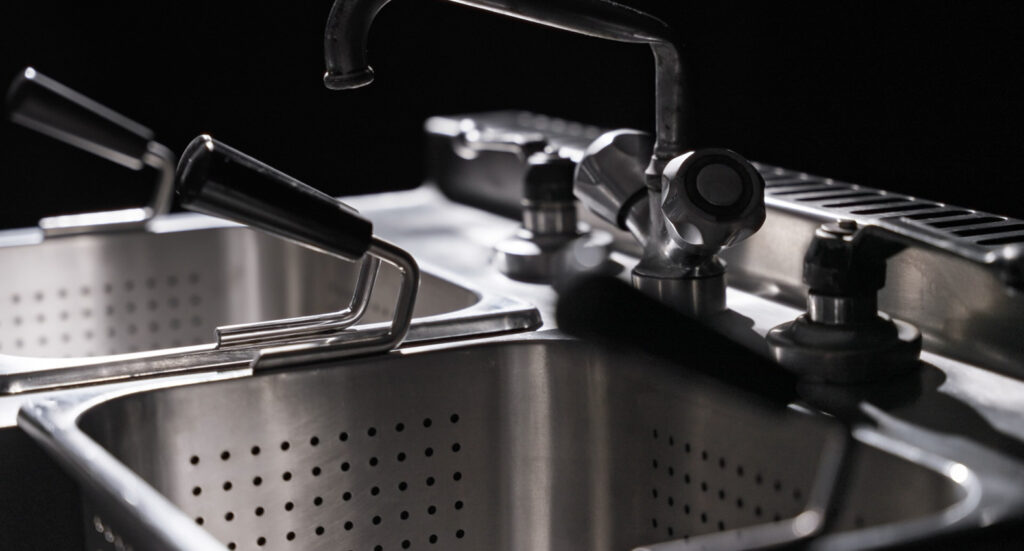
Stainless steel is widely used within professional kitchen environments because its characteristics make it suitable for professional applications and for integration into a variety of configurations.
Design that supports easier cleaning
Kitchen design can also help simplify cleaning procedures. Accessible surfaces, rational geometries and carefully organised components can make everyday sanitation tasks easier to manage.
Functionality and aesthetics can therefore be developed together, creating a coherent working environment without compromising the practical requirements of a professional kitchen.
Technology integrated into professional kitchen design
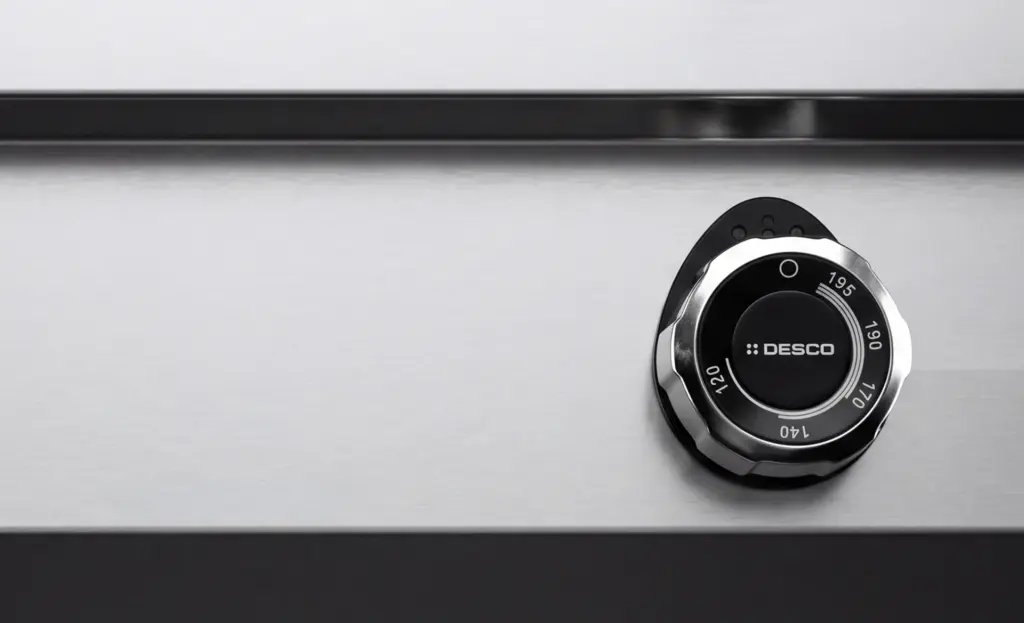
Technology can also form part of the overall design approach. Where supported by the individual equipment, modern control systems can provide more precise management of operating parameters and greater visibility over the use of resources.
The objective is to integrate technology in a practical way, selecting solutions that support the kitchen team without adding unnecessary complexity to daily operations.
Modularity and flexibility for evolving kitchens
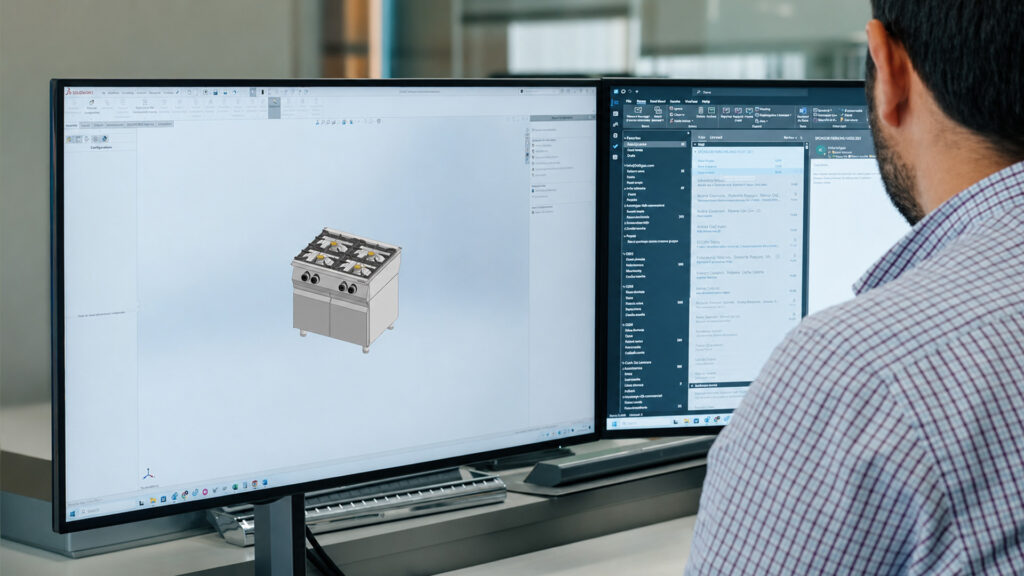
Modularity is another important aspect of contemporary professional kitchen design. Flexible configurations make it possible to organise equipment according to operational requirements and adapt the overall layout to the characteristics of the available space.
Coordinating different elements within the same layout helps create a more consistent working environment where functionality, ergonomics and organisation operate together.
When design becomes a functional choice
Innovative professional kitchen design is therefore not about aesthetics alone. Its value comes from the relationship between space, materials, equipment and the people working within the kitchen.
When each element is considered in relation to real operational requirements, design becomes a tool for creating a more organised, accessible and functional environment that supports chefs and kitchen teams throughout every stage of service.





 Torna su