





Innovative solutions and tailored configurations come together to improve efficiency, precision and workflow quality in modern commercial kitchens.
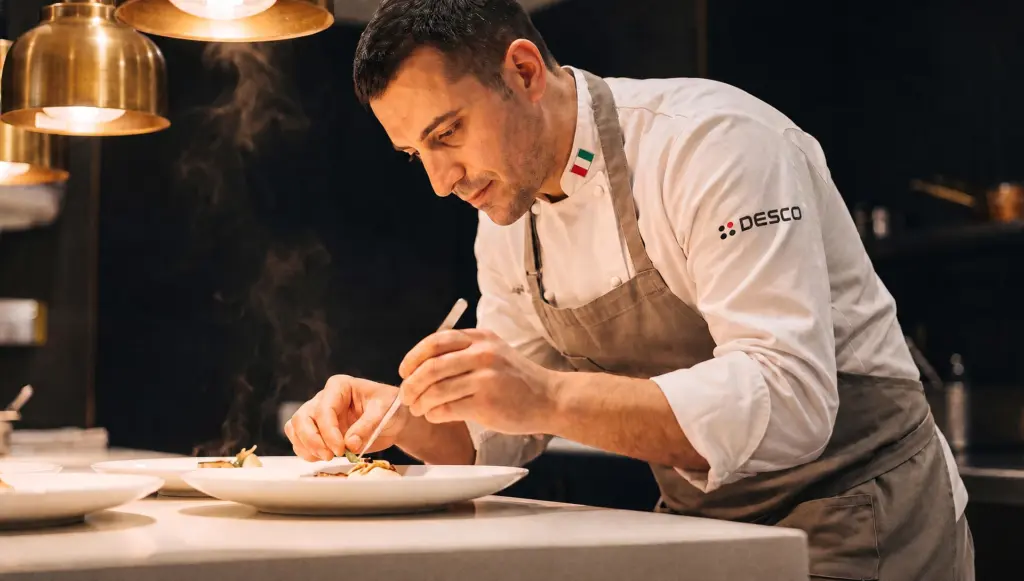
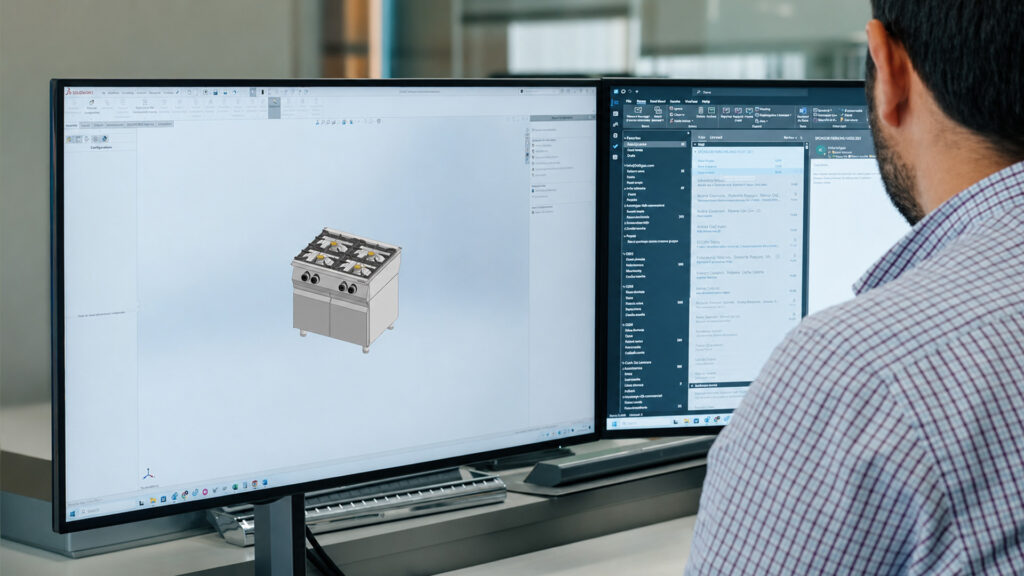
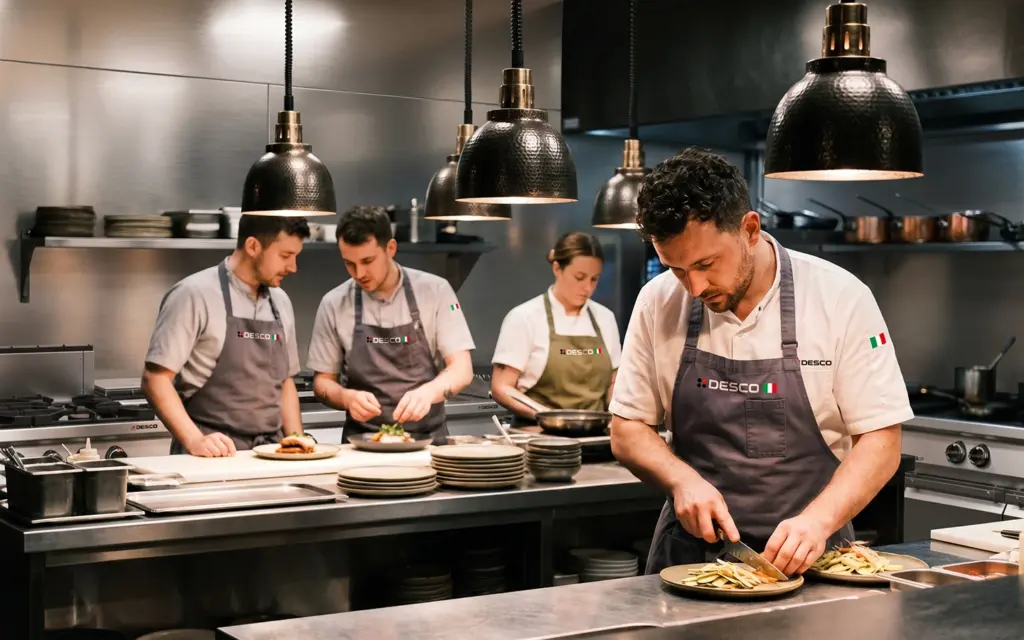
In professional foodservice, technology is playing an increasingly important role in the development of tailored kitchens and commercial kitchen equipment design. The goal is to optimise workflows, reduce operating times and improve the overall quality of service. Innovation is no longer limited to durable materials or ergonomic equipment placement: automation, digitalisation and advanced control systems are becoming integral parts of modern commercial kitchen planning.
Technology in commercial kitchen equipment design
Integrating technology into a professional kitchen means creating an environment in which equipment, space and workflow operate as a coordinated system. A well-planned configuration allows chefs and kitchen teams to work more consistently, reducing repetitive tasks and limiting the margin for error. Technology therefore becomes a tool that supports people, helping to improve precision, consistency and organisation throughout the service.
Kitchen automation: basket lifting systems for pasta cookers
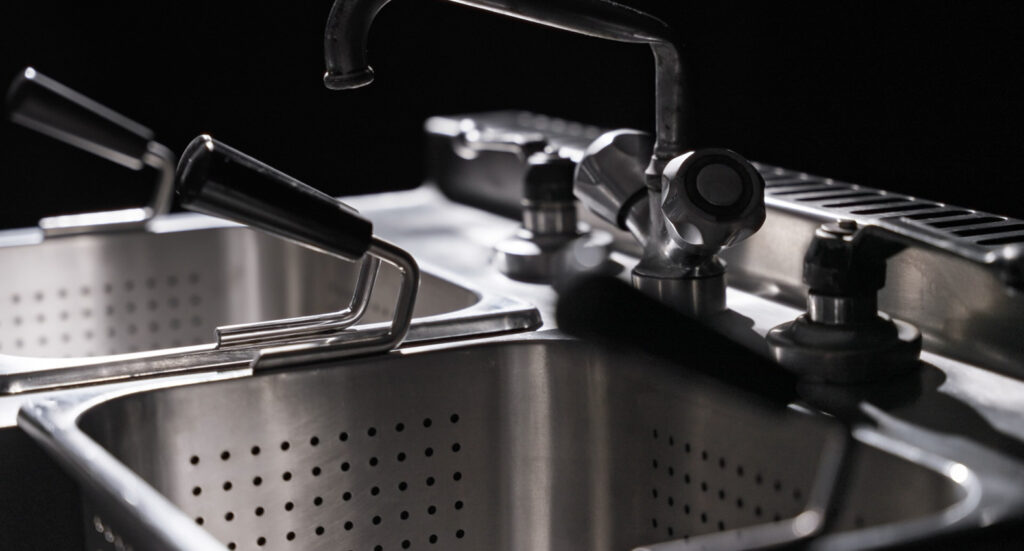
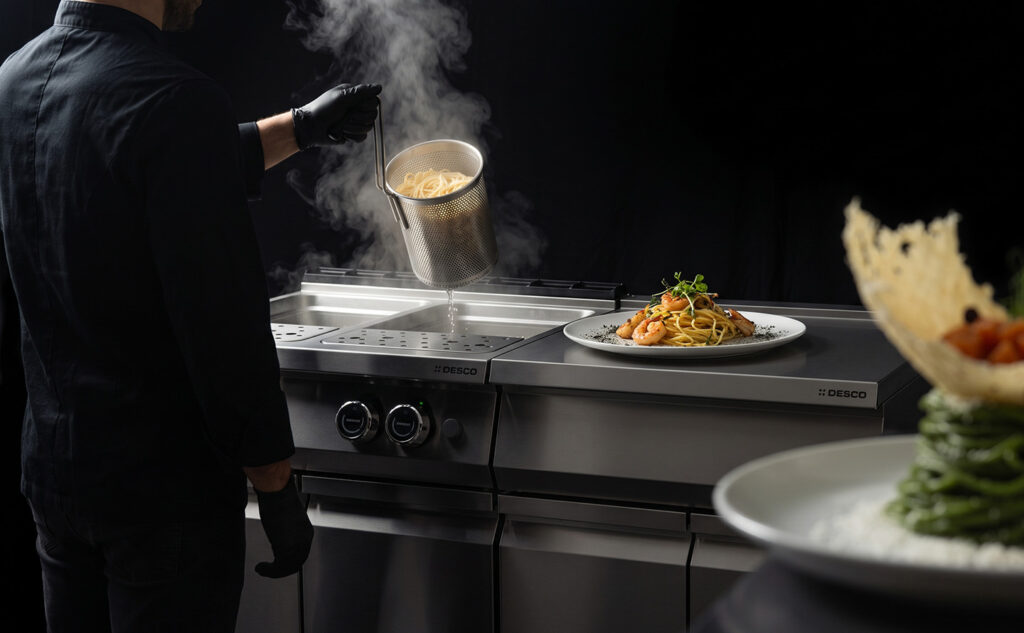
One example of automation in professional foodservice is the use of pasta cookers with automatic basket lifting systems. These solutions can automate the immersion and lifting of baskets according to preset cooking times, allowing chefs and kitchen staff to focus on other preparations at the same time.
Automated cycle management can make cooking more consistent and controlled, reducing the risk of error and supporting a smoother workflow during peak service periods.
Induction in tailored commercial kitchens
Technology integration also applies to cooking systems. Induction hobs can be incorporated into islands or cooking lines designed around the restaurant’s operational workflow, allowing the heat source to be positioned exactly where it is needed.
Precise temperature control supports consistent results across different cooking techniques. The absence of an open flame can also help reduce heat released into the working environment, improving comfort for the kitchen team and reducing the load on ventilation and air-conditioning systems.
Blast chillers and more efficient production planning
Food preservation can also benefit from technological integration. When positioned correctly within the kitchen layout, blast chillers rapidly reduce the temperature of freshly cooked food, helping to preserve its sensory and nutritional qualities while supporting processes that comply with HACCP procedures.
More advanced systems can offer different cycles for specific foods and preservation requirements. Within a tailored commercial kitchen, this can support more efficient production planning, better scheduling of preparation tasks and reduced food waste.
A commercial kitchen designed as an integrated system
Technology delivers the greatest value when it is part of a coherent overall project. Automation, induction, food preservation and workflow planning should not be treated as separate elements, but as parts of the same working system. An effective commercial kitchen is built around the balance between the chef’s requirements, available space, equipment and processes, creating an efficient and functional environment that can evolve with the needs of the operation.





 Torna su